
My Story
From Therapy to Coaching (Short Version)
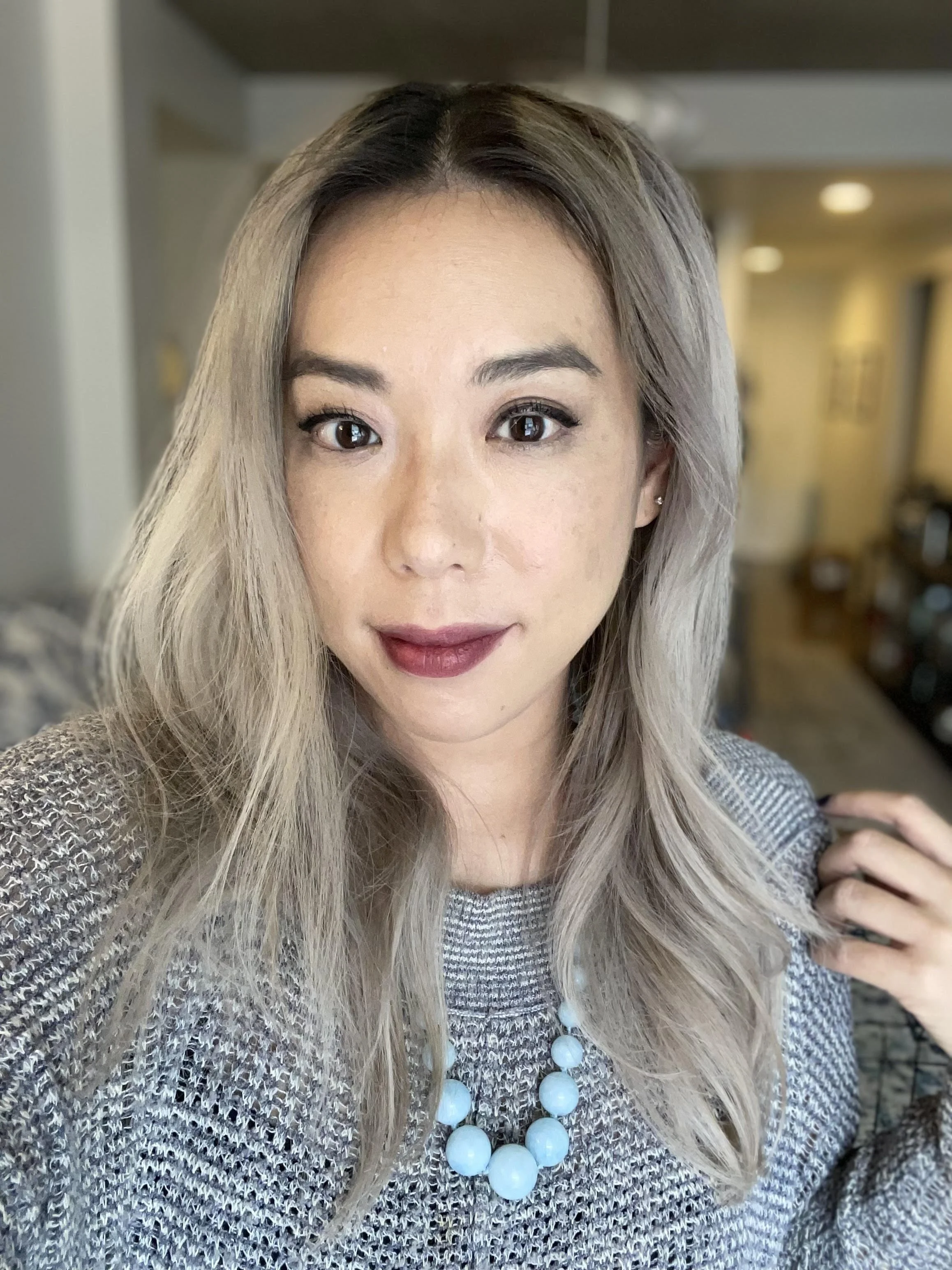
Karen Yeh, J.D., M.A., LMFT
License # LMFT121420
Ask a million “coaches” the difference between coaching and therapy, get a million answers. Here’s mine.
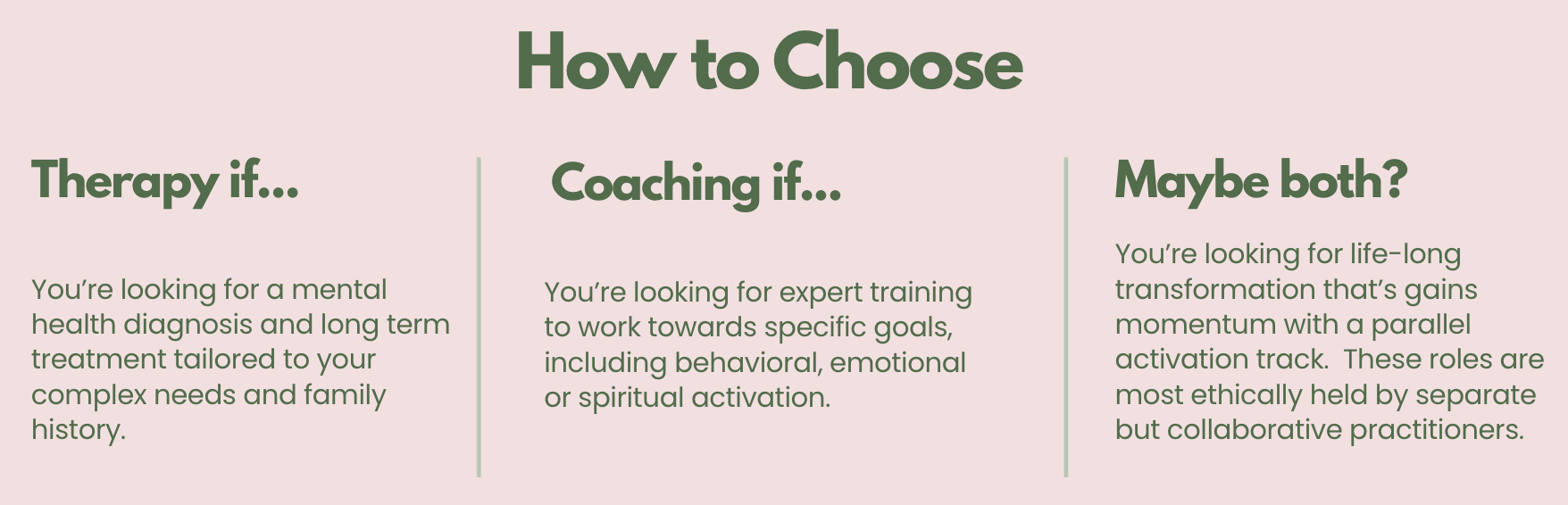
Therapists build a relationship with you for months and years to find the root causes of your symptoms and tailor their interventions to your complex needs. It is a beautiful, long and winding process. In contrast, as your coach, I help you identify specific, discrete symptoms, create clear goals and give you tools you need to meet those goals as quickly as possible. My work is short term, driven by action and complimentary/supportive of a therapeutic practice.
I have been a software engineer, a patent litigator and then a DBT therapist for ten years specializing in Borderline Personality Disorder, Narcissistic Personality Disordr, C-PTSD, and other versions of severe emotion dysregulation.
My Story
From Therapy to Coaching (Long Version)
Ask a million “coaches” the difference between coaching and therapy, get a million answers. Here’s mine.
Modern psychotherapy has taken on the medical model, for better or worse. You go into a therapist’s office, tell them your symptoms and they diagnose you with a root cause: a traumatic event, intergenerational trauma, imbalanced brain chemistry, etc. Based on their diagnosis, they begin treatment whether it includes a referral to a psychiatrist for medication, a regimen of exposure therapy or an emotionally corrective therapeutic relationship and walking through your family history. This work is beautiful and I treasure my ten years as a therapist sorting through root causes and loving my clients through their transformations.
Then I got sick with an illness that has no known root cause. In 2024 I was diagnosed with Long Covid and Myalgic Encephalomyelitis/Chronic Fatigue Syndrome which either has no root cause, has an infinite number of various root causes or has a single root cause that has not yet been scientifically discovered yet. I became housebound, sleeping 15-18 hours per day and unable to engage in any daily activities other than caring for my two dogs.
My recovery took on two parallel tracks. The first track used the standard medical system, starting with my General Practitioner to get referrals to neurological, respiratory, and cardiac specialists, until finally landing at the Stanford Long Covid Clinic to try treatments meant to address each potential root cause, including chronic inflammation, mitochondrial dysfunction, MCAS and other theories. But in order for these specialists to be able to rule out each root cause confidently, I had to begin and end each treatment one at a time, slowly and methodically in a years-long process. Statistically, MECFS patients take 2-5 years to recover, if at all.
So in order to cobble together any kind of liveable existence, I also pursued a parallel track to target my symptoms regardless of root cause. First I addressed my air hunger. After one week of breathing exercises that required no diagnosis or root cause, I eliminated my simplest symptom. Then I tackled my POTS, first trying compression clothing and then a massive daily dose of electrolytes and salt. Again, I had no root cause diagnosis for my POTS symptoms but still successfully reduced the severity of my lightheadedness and dizziness just by addressing the symptom itself. For the next 12 months I used a strict regimen of pacing and aggressive rest and used various devices to track my sleep and heart rate to tackle my PEM crashes until I went from weekly rolling crashes to monthly crashes and finally, after almost two years, the rare crash after multiple days of activity.
This is the difference between therapy and coaching. Therapists build a relationship with you for months and years to find the root causes of your symptoms and tailor their interventions to your complex needs. It is a beautiful, long winding process. In contrast, as your coach, I help you identify specific, discrete symptoms, create clear goals and give you tools you need to meet those goals as quickly as possible. My work is short term, driven by action and complimentary/supportive of a therapeutic practice.
I still sleep 15 hours per day and I have continued to pay attention to new medical research and try treatments for new potential root causes of Long Covid and ME/CFS. I truly hope to recover fully one day. But I could not have survived the process and even thrived had I not pursued the parallel path of addressing each specific symptom one by one until my life became livable again, even as I’m still recovering.
My shift from therapy to coaching has been truly enjoyable. As a DBT therapist I had always incorporated a coaching style and now my expertise with complex mental health conditions and severe behavioral symptoms make me efficient at sorting through which issues need to be addressed with an in depth therapeutic relationship and which behaviors can be changed more quickly, allowing for your therapeutic journey to progress with even fewer obstacles.
Services
For Clients
DBT Skills Training Group
DBT Skills Group is one component of Dialectical Behavioral Therapy. This group meets once per week and the co-facilitators teach several new skills each week based on the DBT curriculum. In this group, participants learn Mindfulness, Emotion Regulation, Distress Tolerance and Interpersonal Effectiveness. This group is not a substitute for individual therapy but can supplement your therapy by teaching different ways of interacting with the world to improve your relationships and sense of self-worth.
For Clinicians
Supervision
I offer supervision for ambitious associates who want to grow a thriving independent practice. I ran a successful solo private practice full model DBT program for 8 years and participated in multiple DBT consultation teams over the years. My style is directive with a relational approach and a heavy emphasis on social justice.
Consultation
Personality disorders, C-PTSD and DBT
I ran a full model DBT program for 8 years specializing in complex PTSD, borderline personality disorder and narcissistic personality disorders. I offer consultation for therapists who want to learn about DBT to decide whether to invest in intensive trainings or to learn enough DBT to integrate DBT-informed therapy into their practice. I also offer consultation on how to work with personality disorders including how to differentiate between BPD and NPD and how the treatments differ.
Populations: children of immigrants
Although the BIPOC community has recently been grouped together for the purpose political power, children of immigrants experience a unique upbringing that not only can result in C-PTSD but also has continued impact on their adult relationships with family that ripples out to other relationships. I offer consultation for psychoeducation on this population as well as treatment approaches and techniques that I have developed to reduce the probability of family estrangement which has become increasingly more popular.
BDSM and kink
I offer psychoeducation on BDSM and kink, including information about the lifestyle from a nonjudgmental and sex therapy lens.
For Somatic Coaching
In my therapy practice, I chose DBT because I value directive and efficient progress. I worked with my clients to determine what changes they wanted to make and then taught them skills to enact them. Learning the skills, however, takes real-life practice.
It is common to not really believe you’re capable of change or that the therapy is working until you have the somatic experience of a different outcome. For example, I truly did not believe I was capable of change even after years of therapy until the first time I successfully practiced Opposite Action to Anger and my body didn’t collapse. My progress was stalled until that moment and momentum flowed right after.
Unfortunately, it can take a long time to stumble across an opportunity to practice a new skill, assuming you even recognize that opportunity in time to pull it out. And even then, since practice makes perfect, you may not get the outcome you’re looking for until you’ve had the opportunity to practice many repetitions.
Because of that, this process can take a long time before seeing any results which can be demoralizing and frustrating.
In my somatic coaching practice, I use elements of drama therapy, sex therapy and BDSM to create scenarios customized to your therapy goals to give you opportunities to practice your skills and experience change somatically, thereby kickstarting your real-life practice to fully integrate your therapy goals.
Education
University of Pennsylvania Law School, Philadelphia, PA
J.D.
University of California at Berkeley, Berkeley, CA
B.S., Electrical Engineering and Computer Science
The Wright Institute, Berkeley, CA
M.A., Counseling Psychology
Golden Gate University, San Francisco, CA
Industrial Organizational Psychology Certification